
TECNO Launches Localized AI in Kenya for African Smartphones and Languages
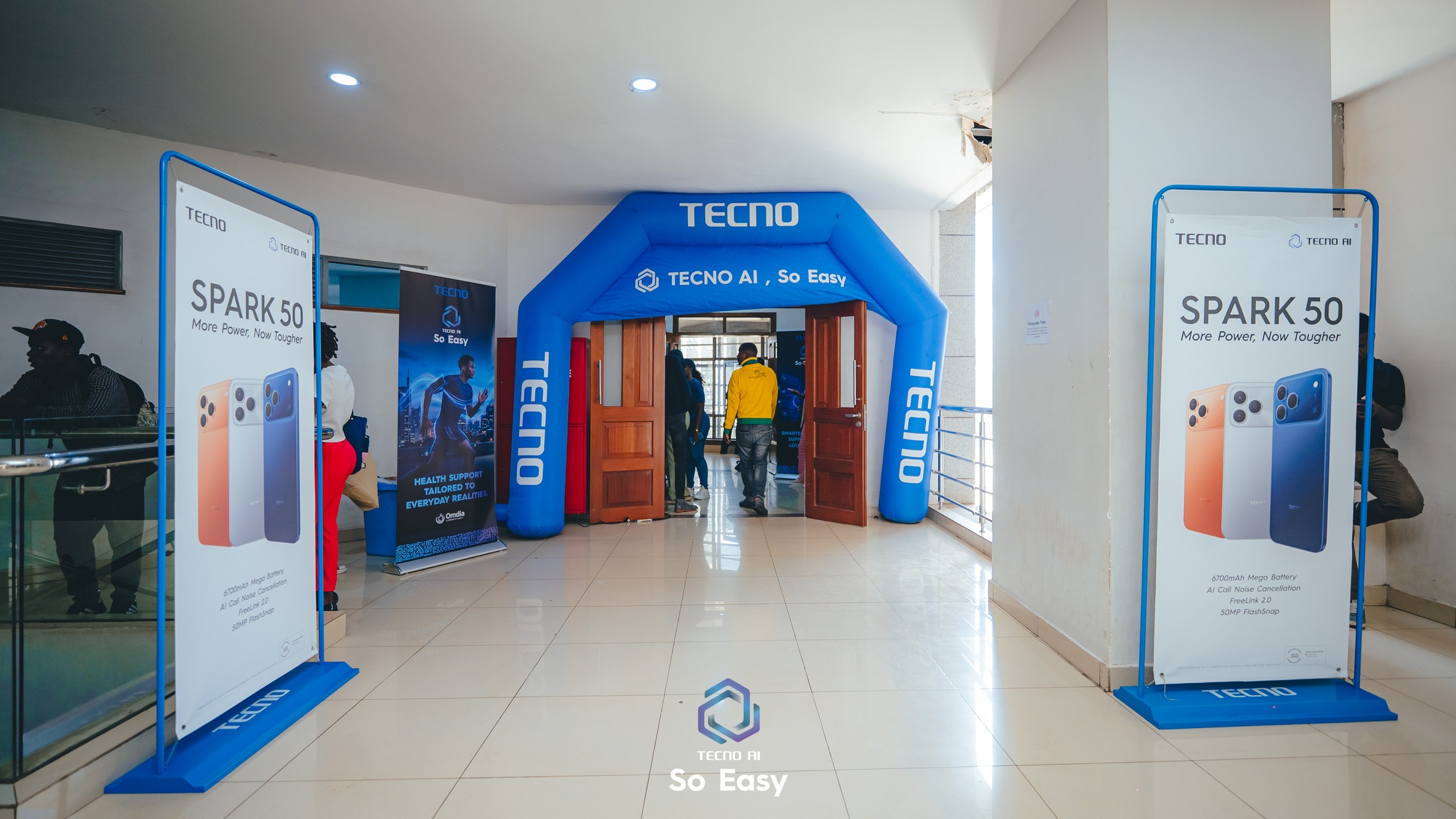
TECNO has officially launched its AI ecosystem in Kenya, introducing a localised mobile intelligence experience designed for the way African consumers actually use smartphones: across mixed languages, in noisy environments, on limited data, and often on devices that must balance affordability, battery life, and performance.
The launch follows the release of an Omdia report, AI Roadmap for Smartphone Vendors in Africa’s Emerging Markets, which identifies TECNO’s AI approach as a practical model for scaling artificial intelligence across the continent.
The report argues that AI in Africa cannot simply copy cloud-heavy models built for high-end devices and always-on 5G markets. Instead, it must be built around local languages, offline resilience, affordable hardware, and everyday utility.
At the centre of TECNO’s strategy is what the company describes as “TECNO AI SO EASY”: an AI experience that works quietly inside the phone to help users take better photos, translate speech, scan documents, manage schoolwork, organise business records, improve content, and access simple guidance through voice and camera-based interaction.
How TECNO AI Works
TECNO AI uses an on-device-first and hybrid AI architecture. This means frequent tasks such as camera enhancement, voice commands, translation, OCR document scanning, and noise reduction are processed directly on the phone instead of being sent to the cloud every time.
When a task is more complex, such as deeper reasoning or heavier content generation, the phone can shift to cloud support when connectivity is available.
When data is low, the network is unstable, or the user is offline, lighter models continue handling core functions on the device.
Omdia describes this as a practical answer to African market realities, where connectivity, data cost, and lower device memory can limit cloud-only AI experiences.
Under the hood, TECNO uses smaller AI models that are compressed to run on mass-market smartphone chips. The Omdia report highlights model sizes of about 0.5B to 2B parameters, supported by compression methods such as quantisation, pruning, and distillation.
In simple terms, TECNO takes large AI capabilities and makes them lighter, faster, and less demanding on battery and storage, so they can work on more affordable devices.
Universal Tone: Better Photography for African Skin Tones
One of the most important features is Universal Tone, TECNO’s AI imaging system for darker skin tones and African lighting conditions.
When a user takes a photo, the phone analyses the face, skin tone, background light, and surrounding colour temperature. The AI then adjusts exposure, contrast, and colour balance so that darker skin is not over-brightened, greyed out, or flattened by the camera.
The feature works through three layers. The first is a skin-tone data layer trained on African portrait data. The second is a portrait processing layer that separates the subject from the background and improves facial exposure without destroying natural texture.
The third is a local tuning layer that adapts to real environments such as indoor lighting, street lighting, natural light and mixed lighting.
For users, the result is simple: clearer selfies, more natural portraits, better low-light shots and photos that represent African skin more accurately.
Swahili Voice AI and Code-Switching Support
TECNO AI also focuses on language access. In Kenya, many users naturally move between English, Swahili and Sheng in the same conversation. Standard voice assistants often struggle with this kind of code-switching.
TECNO’s Swahili voice AI is built using local speech data, including accents, informal expressions and mixed-language speech. The system is tuned to understand users in real-world settings such as markets, public transport, streets and busy homes, where background noise can affect voice recognition.
Core voice commands, translation and device control can run on-device, helping reduce data use and making the feature more reliable when connectivity is weak. Heavier requests can move to the cloud when the network is strong.
Ella AI Assistant: Learning, Documents and Daily Productivity
TECNO’s AI assistant is designed to turn the smartphone into a practical learning and productivity tool.
A student can take a photo of notes or a printed page, and the AI uses OCR to read the text, convert it into editable content, translate it or summarise it.
The assistant can also help users understand long documents, organise tasks, create study notes and ask follow-up questions through natural language.
For professionals and entrepreneurs, the same system can help scan invoices, translate documents, summarise information and organise workflows without requiring complicated software.
Omdia identifies this assistant layer as one of TECNO’s key use cases for education, productivity and socioeconomic mobility in Kenya.
AI Commerce Assistant for Small Businesses
For Kenyan micro-businesses, TECNO AI is designed to support simple business record-keeping.
The AI commerce assistant can read payment alerts and transaction messages, including mobile money-style records, then help log sales and generate summaries.
A trader could ask a question such as, “How much did I sell today?” and receive a simple summary from the phone.
The idea is to give small businesses a lightweight business tool without forcing them to use spreadsheets, point-of-sale systems or cloud dashboards. Omdia describes this as a “no-software” business layer that turns the phone into a basic bookkeeping and sales visibility tool.
Creator Tools for Social Media and Online Selling
TECNO AI also supports Kenya’s fast-growing creator and social commerce culture.
The assistant can help draft captions, suggest hashtags, improve image clarity, clean up product photos, support quick edits and help users prepare content for platforms such as TikTok, Facebook, WhatsApp Business and Instagram.
The value is not just entertainment. For many young users and small traders, better content can help promote products, attract customers and build a stronger online presence.
Noise Reduction and Everyday Communication
TECNO AI also includes acoustic intelligence for clearer calls and voice input. The phone analyses background sound and separates the user’s voice from noise in places such as matatus, open-air markets, streets and busy offices.
This improves call quality, voice notes and voice assistant accuracy, making AI more useful in real environments rather than only in quiet rooms.
Health Guidance, With Clear Limits
TECNO AI also supports simple wellness use cases such as voice-led health information, medication reminders, symptom education and maternal health tips.
The company positions this as a first-touch information tool, not a replacement for doctors, clinics or professional medical advice.
Kenya as a Key AI Adoption Market
Omdia’s report points to Kenya as an early signal market for AI adoption. According to the report, ChatGPT was used monthly by 22.9% of Kenya’s active smartphone installed base as of January 2026, showing strong consumer curiosity and openness to AI. However, Omdia also notes that many AI apps still depend heavily on connectivity, which makes on-device AI important for wider access.
“AI in Africa must be useful before it is impressive,” said Elvis NdekweTECNO AI product operation head. “Our focus is to make AI work on the phones people use every day, in the languages they speak, and in the situations they live and work in.”
With the launch of TECNO AI in Kenya, the company is positioning the smartphone as more than a communication device.
It becomes a camera that understands African skin tones, a voice assistant that understands local speech, a scanner for school and business documents, a creator tool, a business helper and a practical gateway to AI for millions of mobile-first users.