KCB bets on retail investors to help fund Sh300bn sustainability bond programme
KCB Group is betting on growing retail investor appetite for sustainable investments as it moves to raise up to Sh300 billion through a five-year sustainability bond programme.
The bank plans to start with a first tranche of up to Sh100 billion, subject to regulatory approvals and market conditions. The funds will be channelled into green, blue and social projects, including renewable energy, affordable housing, sustainable agriculture, clean transport and financing for MSMEs.
The planned issuance comes as Kenya’s capital markets record stronger participation by individual investors in recent debt offerings, creating a potentially important source of funding for KCB’s ambitious programme.
Frank Mweti, NSE chief executive, said recent sustainable debt issues have attracted both institutional and retail investors, with individual investors showing particularly strong participation.
He said investors are not buying the instruments simply because they are labelled green or sustainable, but are looking for credible issuers, properly structured products, transparent use of proceeds and attractive risk-adjusted returns.
KCB’s regional footprint could also help widen the investor pool beyond Kenya. The NSE said retail participation includes local investors, investors from neighbouring countries such as Tanzania, Uganda and Rwanda, as well as the Kenyan diaspora.
The bank has positioned the sustainability bond as a major source of long-term financing for projects that support Kenya’s transition to a greener and more inclusive economy.
Its Sustainability Bond Framework received a Sustainability Quality Score of 2, rated “Very Good”, from Moody’s, providing an independent assessment of the framework’s approach to selecting eligible projects.
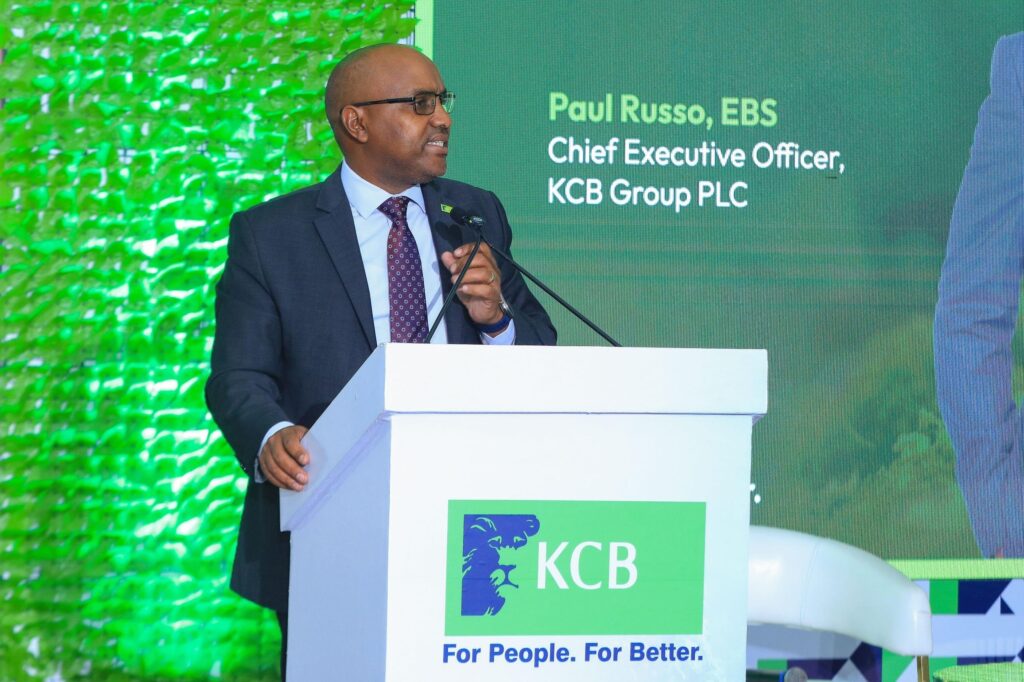
KCB group CEO said Paul Russo said the lender has already established a track record in green financing, disbursing more than Sh187 billion in green loans since 2022. Last year alone, it provided Sh48.8 billion in green financing across its regional markets.
The planned bond will therefore give retail investors an opportunity to participate in financing projects ranging from clean energy and climate-smart investments to small businesses, housing and social infrastructure.
However, market officials say the bigger challenge for sustainable finance is not a shortage of money but a lack of bankable projects capable of absorbing available capital.
For KCB, the success of the Sh300 billion programme will consequently depend on its ability to combine investor appetite with a strong pipeline of credible projects that can deliver both financial returns and measurable environmental and social impact.