LG Unveils Cybersecurity Testing to Cut Development Costs and Time
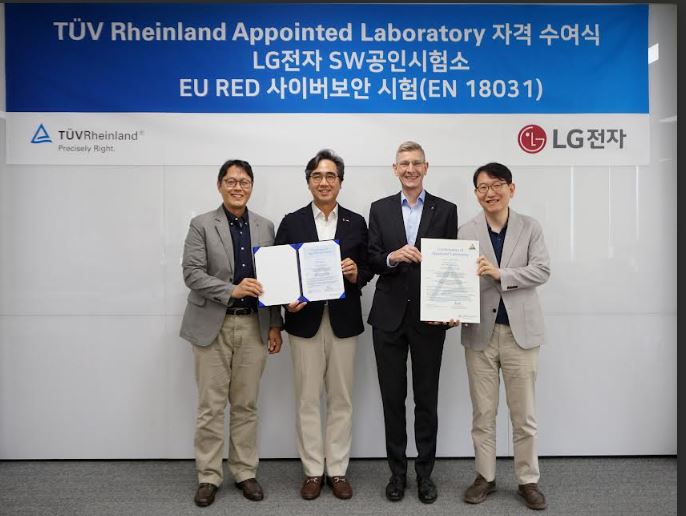
LG Electronics is strengthening the security and speed of its product development process after its SW Testing Laboratory was designated by the global certification organization TÜV Rheinland as an appointed testing laboratory for cybersecurity requirements under the European Union’s Radio Equipment Directive (RED).
The designation allows the company to conduct cybersecurity compliance testing in-house before TÜV Rheinland issues certification based on the test results.
This reduces the need to send prototypes to overseas certification bodies or undergo additional testing, effectively shortening certification timelines while accelerating the launch of new products.
The impact will be particularly significant in security-sensitive and business-to-business (B2B) sectors, including vehicle components and heating, ventilation and air conditioning (HVAC), where faster certification can help LG respond more quickly to customer requirements while reducing the risk of sensitive product information being exposed during external testing.
The enhanced testing capability comes as cybersecurity requirements for connected products continue to expand in Europe. The RED now requires manufacturers to strengthen protection against cyberattacks and prevent the misuse of devices for financial fraud.
Read Also: LG Launches LG xboom Blast, Designed for Outdoor Freedom
LG has been building its software testing capabilities for more than seven years. In 2019, its SW Testing Laboratory obtained accreditation from the Korea Laboratory Accreditation Scheme (KOLAS) for international software certification testing. Since then, the laboratory has expanded from functional safety testing for home appliances and automotive products to cybersecurity testing, strengthening its ability to address increasingly complex software and security requirements.
The company is also preparing for the EU Cyber Resilience Act (CRA), which is set to take effect in 2027 and will extend cybersecurity requirements to products with digital elements, including those without wireless connectivity.
The SW Testing Laboratory is further pursuing qualifications for CRA certification testing, combining the expertise of LG’s Next-Generation Computing Research Lab with the certified testing capabilities of its SW Center.
In addition to meeting regulatory requirements, LG is strengthening security throughout the product lifecycle through its proprietary LG Shield framework.
The system incorporates security technologies during product development and supports secure, device-specific software patches after launch as new vulnerabilities are identified.
This is in addition to adopting post-quantum cryptography (PQC) to prepare its products for future cybersecurity threats posed by advances in quantum computing.
“Building on our globally proven software competitiveness, we will continue to deliver safer, more reliable products and services to our customers,” said Kim Dong-wook, head of the SW Center at LG Electronics.