NSE stocks fall on Thursday as foreign investors sell Safaricom, banks
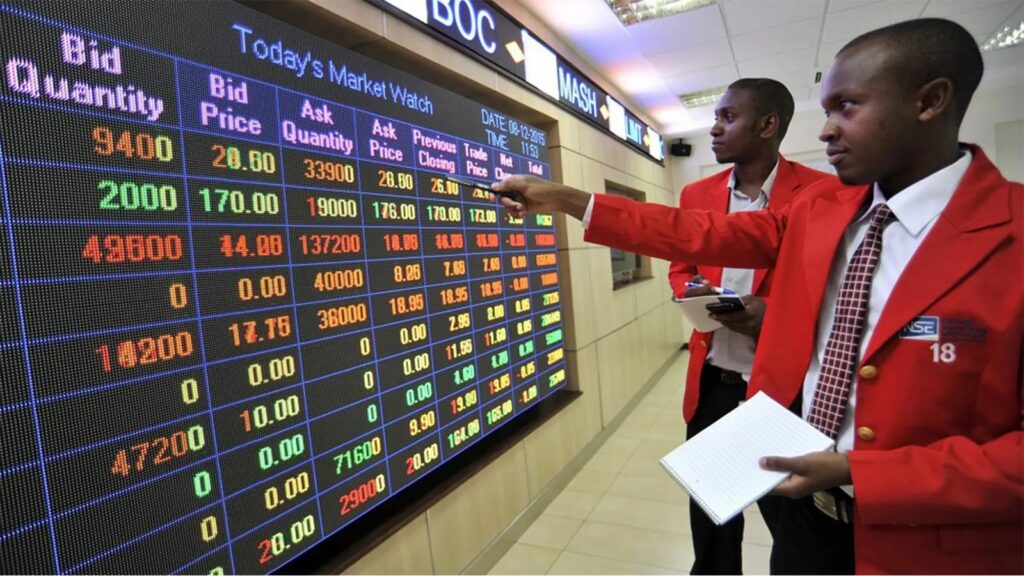
Kenya’s stock market fell on Thursday as foreign investors stepped up selling of major counters, pushing the benchmark index nearly one percent lower despite a sharp rise in trading activity.
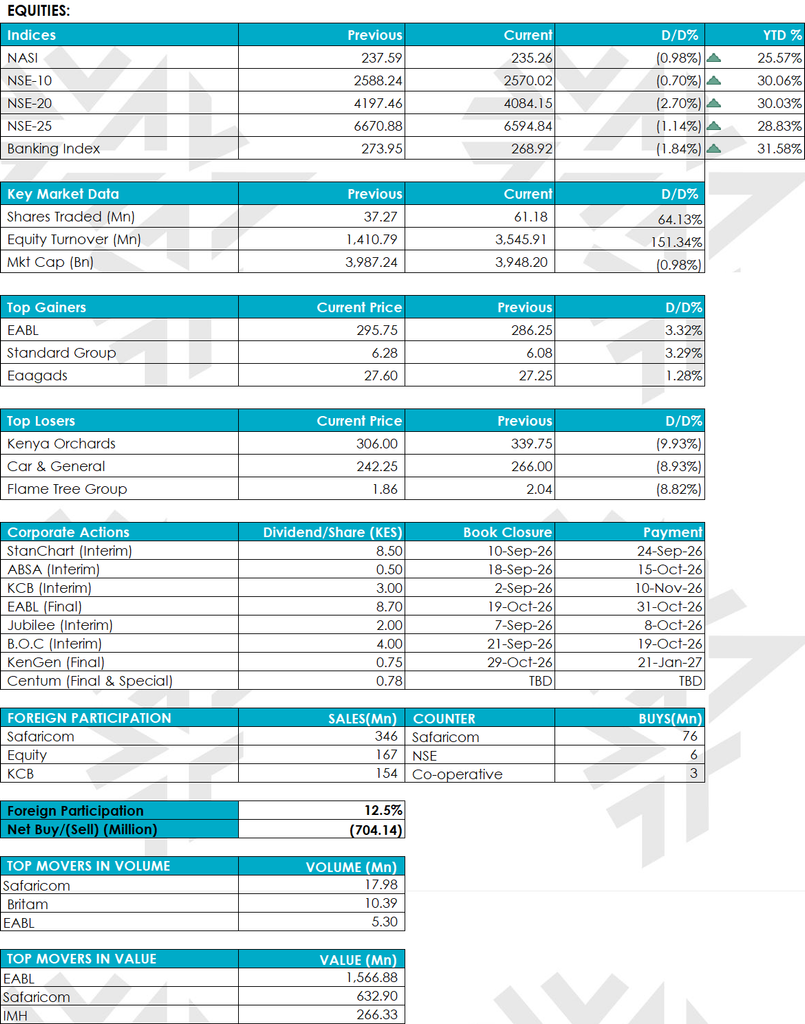
The Nairobi All Share Index (NASI) declined 0.9 percent to 235.26 points, reflecting losses across a number of counters.
Trading activity, however, increased significantly during the session, with the number of shares traded rising 64 percent to 61 million.
Equity turnover more than doubled, climbing 151 percent to Sh3.55 billion, signalling increased activity by investors even as the broader market remained under pressure.
Safaricom was the most actively traded stock by volume, with 17.9 million shares changing hands. East African Breweries Limited (EABL), meanwhile, accounted for the largest value of trades at Sh1.57 billion.
Foreign investors remained net sellers, accounting for 13 percent of market activity. Their net sales stood at Sh704 million, with Safaricom, Equity Group and KCB Group among the counters that recorded significant foreign selling.
The selling pressure on some of the market’s largest stocks contributed to the decline in the overall index, despite gains in selected counters.
EABL was among the day’s strongest performers, rising 3.3 percent. Standard Group and Eaagads were also among the top gainers.
On the losing side, Kenya Orchards recorded the largest decline, falling 9.9 percent. Car & General and Flame Tree Group also featured among the biggest losers.
The session highlights the mixed investor sentiment at the Nairobi Securities Exchange, with increased turnover suggesting stronger trading activity while foreign investors continued to reduce their positions in some major stocks.
The sharp rise in turnover was largely concentrated in a few heavily traded counters, particularly EABL and Safaricom, underscoring the importance of large-cap stocks in driving daily market activity.
The decline in the NASI comes as investors continue to assess valuations, corporate earnings prospects and broader economic conditions, with foreign flows remaining an important driver of movements in some of the market’s most liquid counters.