
LG Advances Residential Heating Tech Globally
As African cities continue to expand at an annual rate of 3.5 percent, the fastest globally the demand for affordable and energy-efficient housing infrastructure is also accelerating.
In Kenya, where urbanization is rising even faster in major hubs such as the capital, Nairobi (now exceeding 4 million residents and still growing steadily), the national housing deficit is widely estimated at over 2 million units, exposing a persistent gap between supply and demand for affordable homes.
At the same time, electricity demand has been increasing alongside rapid urban densification and rising appliance adoption, placing additional strain on residential energy systems and affordability.
Against this backdrop, LG Electronics (LG) is positioning its latest global residential heating and energy solutions to align with these shifts, emphasizing technologies designed to support high-density urban living and smarter household energy management across fast-growing markets.
The company’s latest deployments in Europe demonstrate how these systems perform at scale in modern residential developments, offering a reference point for markets where rapid urbanisation is placing increasing pressure on electricity supply and building efficiency standards.
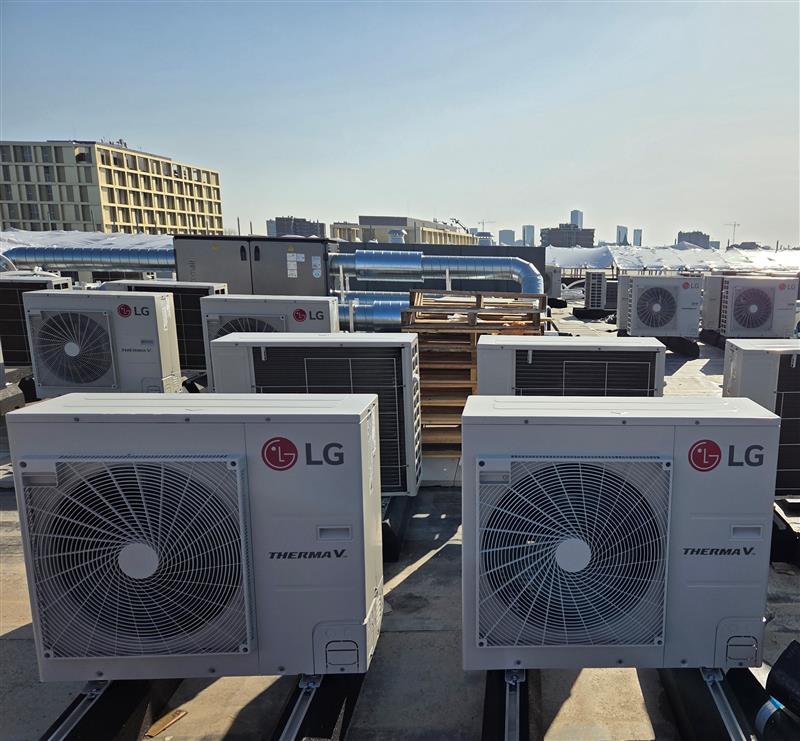
LG is supplying integrated heating and hot water solutions for more than 250 apartments across residential developments in Eindhoven and Ridderkerk in the Netherlands. These projects showcase the company’s ability to deliver compact, energy-efficient and digitally connected HVAC systems designed for dense urban housing, an area of increasing relevance to African cities like Nairobi, where space and cost efficiency are becoming critical planning priorities.
In Eindhoven, LG secured a contract for a 157-unit residential development by working closely with engineering and construction partners from the earliest design stages. The project features LG’s Therma V R32 Split heat pump system paired with an indoor Combi Unit that integrates a water tank and key hydronic components into a single compact solution. This reduces installation complexity while maximising usable indoor space, a key advantage for modern apartment developments.
The system’s performance is supported by LG’s proprietary compressor technology, engineered for durability, stable heating and reduced vibration. It uses R32 refrigerant, which meets strict environmental standards while improving energy efficiency. Residents also benefit from LG ThinQ smart connectivity, enabling remote monitoring and energy optimisation for more efficient household consumption.
A second project in Ridderkerk will see LG supply heating systems for 102 residential units, with installations scheduled to begin in the second quarter of 2026. The solution includes the Therma V R32 Split system, Combi Unit and a 60-litre stainless steel buffer tank designed to improve system stability by balancing thermal storage and ensuring consistent performance for both space heating and hot water.
In addition to these projects, LG continues to expand its global HVAC portfolio through international exhibitions, including Mostra Convegno Expocomfort 2026, where it showcased next-generation systems such as the R290-based Therma V Monobloc. The company also introduced a new indoor product lineup comprising its Control, Hydro and Combi units, which are recognised for design excellence and installation flexibility.
“While developed for global markets, these technologies reflect trends that are increasingly relevant to Africa, where urbanisation is driving demand for smarter housing infrastructure, improved energy efficiency and reduced long-term building operating costs. In markets such as Kenya, where residential development is accelerating, integrated HVAC solutions of this kind are emerging as part of broader conversations around sustainable urban living and energy resilience,” said LG’s President for East Africa, Donghun Lee.
According to market projections, the global heat pump market will reach USD 167.4 Billion by 2036, expanding at a 10.5% CAGR, driven by electrification of heating and cooling systems[2]. The company plans to continue scaling its integrated HVAC solutions worldwide, building on its engineering successes in high-density residential environments.