
Kenya Risks Losing Mining Investment to Tanzania, Uganda Over Licensing Delays, Industry Warns
enya’s mining industry has welcomed government plans to streamline mining laws, saying proposed reforms, including legislation to establish a Sovereign Wealth Fund, could strengthen investor confidence and attract fresh capital into the sector.
However, industry players say the benefits of the reforms will only be realised if the government also addresses lengthy delays in issuing mining licences, which they argue are discouraging investment and allowing neighbouring countries to attract projects that could have been developed in Kenya.
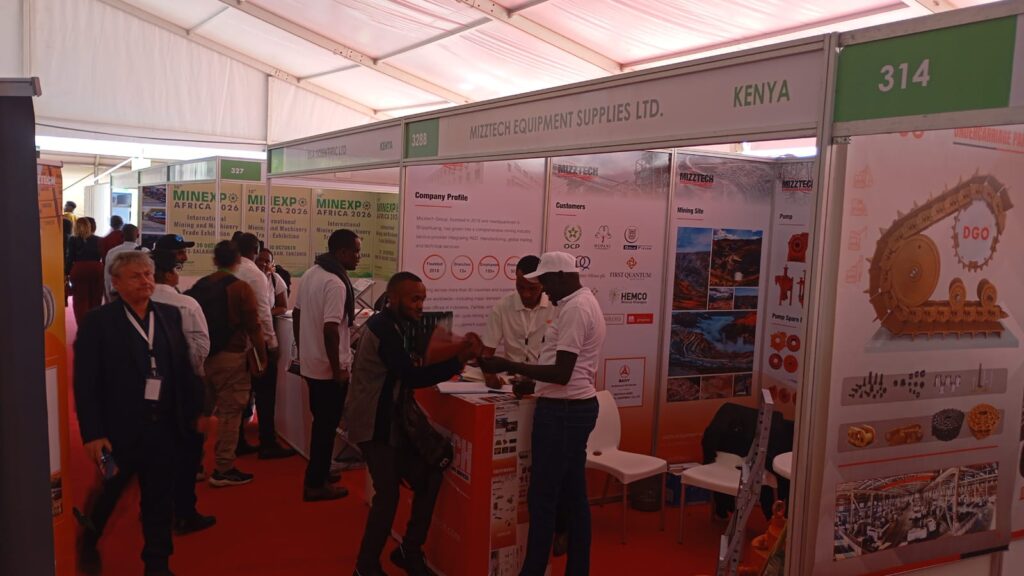
The concerns were raised during the 10th Minexpo Kenya exhibition in Nairobi, where mining companies, equipment suppliers and consultants discussed the regulatory and operational challenges facing the sector.
Charles Komen, Kenya country manager at Mizztech Equipment Supplies, said investors continue to face prolonged waits for mining licences, with some applications taking more than three years to process. He noted that many companies are issued with short-term permits instead of full licences, creating uncertainty over long-term investments.
“We urge the government to move with speed in issuing mining licences. Many investors have waited for more than three years and are only being issued with short-term mining permits instead of licences,” Komen said.
He warned that unless licensing becomes more predictable, investors could increasingly shift their capital to countries such as Tanzania and Uganda, where regulatory processes are viewed as more efficient.
Industry players also called for better management of the country’s mining cadastre to improve transparency and certainty in the allocation of mineral rights.
Beyond licensing, stakeholders said ongoing legislative reforms aimed at improving royalty sharing, increasing local participation and strengthening community benefits could make Kenya a more competitive mining destination. They argued that the proposed Sovereign Wealth Fund framework could further reassure investors by demonstrating a long-term commitment to transparent management of mineral revenues.
Participants also emphasised the need for stronger engagement with communities hosting mining projects, saying local support is critical to reducing disputes and ensuring sustainable resource development.
The industry further urged mining companies to invest in modern, reliable equipment to improve productivity, reduce operational downtime and lower production costs as exploration and extraction activities expand.
Cyrus Njonde of Geomine Consulting Group said East Africa is well positioned to benefit from rising global demand for critical minerals, including rare earth elements, uranium and tin. He noted that Kenya’s deposits of gold, limestone, feldspar and gypsum, alongside growing interest in rare earth minerals, present significant opportunities for investment and value addition if supported by a predictable regulatory environment.
“Kenya’s deposits of gold, limestone, feldspar and gypsum, alongside emerging interest in rare earth minerals, present opportunities for increased investment and local value addition,” said Njonde.
Industry players said that combining faster licensing, legal reforms and investment in technology would enable Kenya to unlock its mineral potential, attract more foreign investment and create jobs across the mining value chain.