
Safaricom Summit 2026 Pushes for Safer AI Innovation
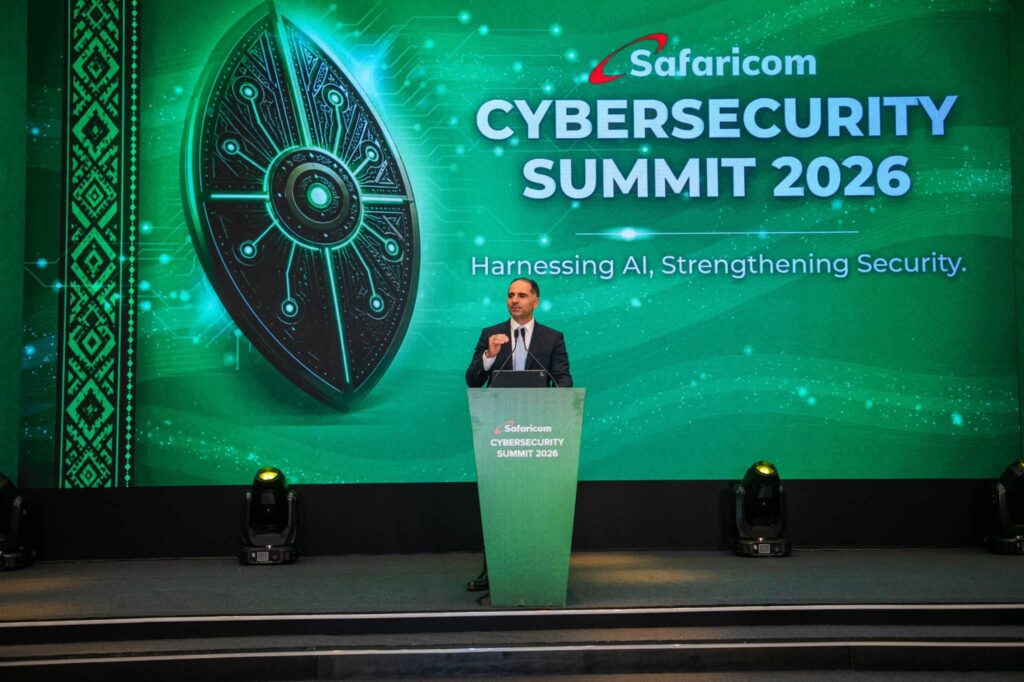
Safaricom has called on businesses and public institutions to strengthen cybersecurity safeguards as they adopt artificial intelligence (AI), warning that trust, accountability and collaboration will be critical to protecting Kenya’s expanding digital economy.
The call was made during the fourth Safaricom Cybersecurity Summit 2026, which brought together industry leaders, technology providers and cybersecurity experts to examine how AI can strengthen digital defences while creating new risks for organisations.
Held under the theme “Harnessing AI in Strengthening Security,” the summit focused on emerging threats, including rogue AI systems, ransomware, phishing attacks and increasingly sophisticated cybercrime targeting businesses and consumers.
Safaricom Chief Enterprise Officer Amgad Nafie, who delivered the closing keynote, urged organisations to begin their AI adoption journeys with practical applications while involving the teams responsible for business operations, accountability and cybersecurity.

Nafie challenged leaders to identify an initial AI use case, bring together relevant stakeholders and establish safeguards that would allow their organisations to innovate while managing emerging risks.
“The future will belong to organizations that can innovate boldly, secure intelligently and earn trust consistently,” he said.
The discussions reflected growing concerns about the security implications of AI as businesses increasingly integrate automated systems into their operations, customer services and decision-making processes.
Kabogo Calls for Stronger Cybersecurity Measures
Cabinet Secretary for Information, Communications and the Digital Economy William Kabogo used his keynote address to emphasise the need to strengthen cybersecurity as AI becomes increasingly integrated into everyday life.
“Every system we automate, we must secure,” Kabogo said.
He highlighted ransomware and phishing among the threats facing digital users and said his ministry would work with sector regulators and other stakeholders to strengthen Kenya’s response to cybercrime.
The Cabinet Secretary also called for greater protection of children online, emphasising the importance of safer digital platforms, parental controls and responsible AI use.
He reminded parents of their role in protecting children from online risks, as young people increasingly interact with digital platforms for education, communication and entertainment.
The discussions highlighted the need for cybersecurity policies that address both technological vulnerabilities and the human factors that can expose individuals and organisations to online threats.
Ndegwa Says Trust Will Shape Africa’s AI Future
Safaricom PLC Chief Executive Officer Peter Ndegwa said trust would be central to Africa’s ability to benefit from artificial intelligence, arguing that technological advancement must go hand in hand with customer protection.

“Africa’s AI future will not be decided by who has the biggest model. It will be decided by who earns the most trust,” Ndegwa said.
He cited Safaricom’s use of AI-powered models to detect fraud in transaction patterns, alongside its Managed Security Operations Centre, which helps organisations monitor and respond to threats in real time.
Ndegwa said customer protection should be incorporated into the design of digital services rather than introduced after systems have been developed.
He also challenged business leaders to identify problems within their organisations that AI could help solve while taking deliberate steps to strengthen trust as they introduce the technology.
The approach reflects the growing role of AI in detecting suspicious transactions, identifying unusual system activity and helping security teams respond to potential cyber incidents.
However, the summit’s discussions also underscored the importance of governance and safeguards to prevent AI systems from introducing additional vulnerabilities.
Summit Examines Rogue AI and Network Security
The summit featured discussions on rogue AI and the measures organisations can adopt to secure AI systems through appropriate governance and technical safeguards.
Safaricom Business explored the risks associated with rogue AI, highlighting the importance of establishing controls that ensure automated systems operate within defined security boundaries.
Technology company Cloudflare presented its Connectivity Cloud, which combines secure connectivity, Zero Trust access and application protection to help businesses secure their digital operations.
The sessions also examined Safaricom Business’s Software-Defined Wide Area Network (SD-WAN) solutions and NETSCOUT Systems’ layered edge defence capabilities.
Discussions on network protection highlighted the importance of real-time distributed denial-of-service (DDoS) protection, which helps organisations defend their systems against attacks designed to overwhelm online services with excessive traffic.
These measures are increasingly relevant as businesses depend on interconnected networks, cloud-based applications and digital platforms to deliver services to customers.
The summit also brought together cybersecurity partners Kaspersky, Proofpoint, Huawei, Fortinet and Cloudflare, alongside Safaricom Business, to share expertise and discuss approaches to strengthening digital resilience.
Collaboration Seen as Key to Digital Resilience
Participants emphasised that protecting organisations against evolving cyber threats requires more than deploying security software, calling for cooperation between technology providers, businesses, regulators and other stakeholders.
As AI becomes more accessible, organisations face the challenge of using its capabilities to improve productivity and security while preventing misuse, protecting sensitive information and maintaining accountability.
The discussions highlighted the importance of combining technology with clear governance frameworks, employee awareness and incident-response procedures.
For businesses, particularly those expanding their digital operations, integrating cybersecurity into the planning and development of AI applications could help reduce vulnerabilities and maintain customer confidence.
Now in its fourth year, the Safaricom Cybersecurity Summit has become a platform for discussions on emerging digital risks and the measures needed to protect organisations and consumers.
The 2026 edition placed particular emphasis on the relationship between AI innovation and cybersecurity, with speakers urging leaders to adopt practical solutions while ensuring that security and trust remain central to their digital transformation strategies.