Kenya, Ethiopia Lead Africa’s Push for More Forest Finance
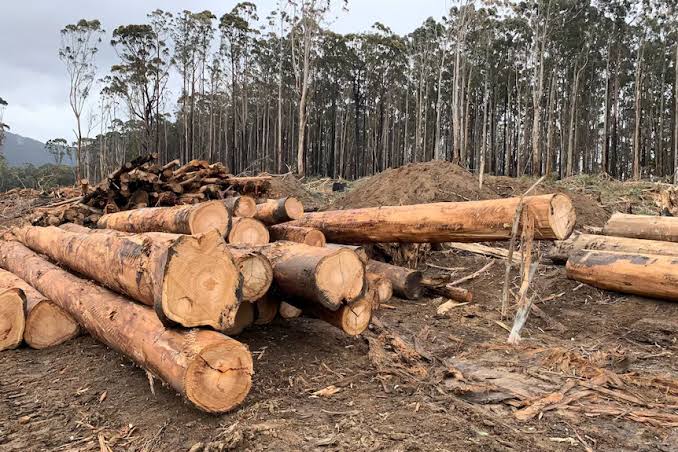
African governments are developing new ways to finance forest protection and restoration. The approaches offer practical examples of how forest finance can move from promising models to large-scale delivery.
This is according to the first Progress Report of the Forest Finance Roadmap. The report was launched during the Forest & Climate Leaders’ Partnership (FCLP) Forest Finance Day at Climate Week NYC.
The global assessment shows that forest finance is starting to move. Credible mechanisms that can scale are gaining momentum.
However, the pace remains too slow. The scale of funding is also below what is needed to halt and reverse forest loss by 2030.
The Roadmap seeks to change the economics of forest protection. It also aims to close an estimated US$66.8 billion annual forest finance gap.
Forests receive less than one per cent of global climate finance. Yet they offer about one fifth of the world’s cost-effective climate mitigation potential.
Emelyne Cheney, Director of the FCLP Secretariat, said the report provides a clearer picture of where forest finance is flowing.
“One year on, the Forest Finance Progress Report provides a clearer picture of where finance is flowing, and where it is not,” she said.
“That clarity matters: closing the forest finance gap starts with understanding its scale and where the gaps lie.”
Cheney said pressure on forests is increasing. She added that solutions are clear but need sustained political attention and investment.
“Forests cannot be an afterthought in the international climate agenda – they need to remain at the centre of it,” she said.
Kenya leads African examples
Kenya has secured at least US$229 million in new external finance for forest and landscape-based economic development.
The funding includes a US$200 million World Bank operation and a US$29.2 million Green Climate Fund grant for the Lake Region.
Kenya also increased its forestry budget by about US$38.7 million in the 2025/26 financial year.
It maintained an allocation of about US$143.8 million for 2026/27.
Ethiopia boosts restoration funding
Ethiopia is investing between 0.5 and one per cent of its annual federal budget in forest and landscape restoration.
This amounts to about US$40 million to US$80 million a year.
The investment compares with an estimated US$4.3 billion annual cost from land degradation.
Ethiopia’s locally owned financing mechanism has helped attract hundreds of millions of dollars in international concessional finance and co-financing.
In August, Ethiopia became the 17th country to endorse the Intergovernmental Land Tenure Commitment.
The move strengthens political support for the rights of Indigenous Peoples and local communities.
Nigeria targets private investment
Nigeria has announced its Securing Nigeria’s Forest Future Country Package.
The framework seeks to bring development partners, financial institutions, philanthropy and private investors together.
It will focus on national forest, climate and biodiversity priorities.
The package is expected to launch internationally at COP31.
Environment Minister Balarabe Abbas Lawal said it will strengthen the environment for private investment, blended finance and carbon finance.
He said the approach will also support livelihoods linked to conservation. It will promote meaningful participation by women and young people in the green economy.
Congo Basin targets US$2 billion
The Central African Forest Initiative (CAFI) is developing a US$290 million Payments for Ecosystem Services pipeline.
The programme aims to mobilise up to US$2 billion by 2035 across the Congo Basin.
It is expected to reach about 7.8 million direct beneficiaries.
At least 50 per cent of the resources are expected to flow directly to farmers, local communities and Indigenous Peoples.
Gabon is a CAFI partner country. It is also advancing results-based approaches to forest finance.
Africa has about 663 million hectares of forest. This represents 16 per cent of the world’s forest area.
The continent’s forests will be critical to the global goal of halting and reversing forest loss by 2030.
The emerging approaches show how forests can be included in economic and investment decisions.
They also seek to create greater value from keeping forests standing while supporting development, livelihoods and communities.
Other African countries are also integrating forest outcomes into financial policy.
Côte d’Ivoire has launched Africa’s first Sustainability-Linked Finance Framework.
It has also secured West Africa’s first EUR433 million sustainability-linked sovereign loan.
Uganda is piloting an approach that integrates forest and agricultural resilience into sovereign debt and credit analysis.
Ethiopia is set to host COP32 in Addis Ababa in 2027.
The developments give African governments an opportunity to shape the global forest finance agenda.
They are doing so by demonstrating financing solutions, rather than only seeking funding.
The examples show that financing mechanisms already exist. African governments are beginning to put them into practice.
The next test is whether they can attract and deploy funding at the speed and scale needed by 2030.