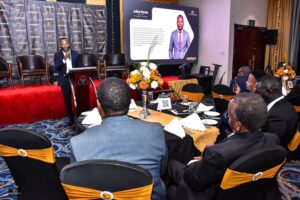
Spotify, ONErpm deepen push into East Africa talent with Fresh Finds workshop in Nairobi

Music streaming giant Spotify has partnered with global music business firm ONErpm to host a two-day artist development workshop in Nairobi, in a move aimed at strengthening East Africa’s pipeline of emerging musical talent.
The programme, held under Spotify’s Fresh Finds initiative, brought together upcoming artists, producers and songwriters from Kenya, Uganda and Tanzania, reflecting growing industry efforts to position the region as a key contributor to the global music scene.
Participants included artists such as We Are Nubia, Zaituni, Ila Nia, Kahuti, Genes1s, Hood Boyz, Phany Love, Vyroota and Hildah Watiri, alongside producers SoFresh, Run, ODZZ and JAE5. Mentorship and songwriting sessions were led by regional acts including Watendawili and Joshua Baraka.
The workshop combined studio recording sessions with training on branding, media engagement and the commercial side of music, as platforms increasingly look beyond distribution to actively shape artist careers.
Spotify said the Fresh Finds programme is designed to bridge the gap between local talent and global audiences, with a focus on identifying authentic African voices and supporting them with the tools needed to scale internationally.
Victor Okpala, Fresh Finds Africa Lead for Spotify Sub-Saharan Africa, said the company is investing in long-term artist development by equipping creators with both creative and business skills.
“Our goal is to ensure artists are not only making great music, but also understand how to sustain their careers globally,” he said.
Executives at ONErpm said the partnership reflects rising global interest in East African music, which has in recent years gained traction on streaming platforms and social media.
Osagie Osarenkhoe, the firm’s Director of A&R and Operations for Africa, said the region is producing some of the continent’s most compelling sounds, adding that collaboration between artists and industry players is key to unlocking further growth.
Beyond creative development, the sessions also addressed industry standards and transparency. Maxwell Nguku told participants that Spotify’s editorial playlists operate on a merit-based system, warning against pay-for-play practices and emphasising the importance of organic discovery.
For many of the attendees, the workshop offered rare access to industry knowledge and networks. Joshua Baraka described the experience as “eye-opening,” noting that it extended beyond music production to understanding how to build a sustainable brand.
The initiative underscores a broader shift in the African music industry, where global platforms and distributors are increasingly investing in grassroots talent development to secure the next wave of export-ready artists from the continent.