Kenya could have saved Sh116bn on SGR construction, says World Bank
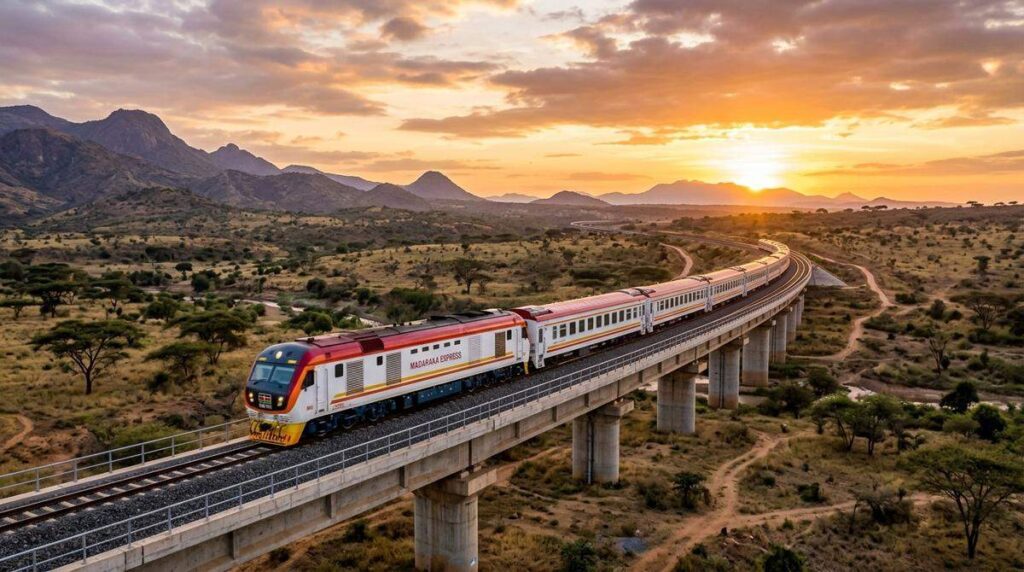
Kenya could have saved up to US$900 million (about Sh116 billion) in the construction of the Standard Gauge Railway (SGR) between Mombasa and Nairobi if the project had been delivered at a cost comparable to Tanzania’s railway, a new World Bank report says.
The report estimates that Kenya’s railway cost significantly more per kilometre than similar projects in neighbouring countries, raising questions about procurement practices, land acquisition and possible corruption in the implementation of the multibillion-shilling infrastructure project.
According to the November 2026 Kenya Economic Update, the Mombasa-Nairobi railway cost US$7.6 million per kilometre, compared with US$5.7 million for Tanzania’s Dar es Salaam-Dodoma railway and US$5.3 million for the Djibouti-Addis Ababa line.
Using Tanzania’s railway as a benchmark, Kenya could have saved up to US$900 million in initial construction costs, the World Bank says.
The report estimates that at least 30 per cent of the potential savings, equivalent to at least US$270 million (about Sh35 billion), can be attributed to governance weaknesses rather than technical or geographical differences.
It identifies preference for direct contracting instead of competitive tendering, land speculation and alleged fraud involving land titling, valuation and compensation payments as some of the factors behind the higher costs.
“Kenya’s SGR—with two segments built so far—has been significantly costlier compared to similar projects in neighboring countries,” the report states.
The World Bank acknowledges that differences in terrain, construction specifications and land acquisition costs influence railway development costs but argues that these factors do not fully explain Kenya’s higher expenditure.
It notes that Tanzania’s railway was constructed several years later and to a higher specification, including electrification, yet recorded a lower construction cost per kilometre.
Kenya’s railway, on the other hand, was diesel-powered and had a lower altitude gain than the Ethiopian line, which had to overcome more mountainous terrain.
The report further points to procurement practices that have exposed public infrastructure projects to inflated costs, conflicts of interest and limited competition.
It notes that direct contracting and public-private partnership projects emerging from unsolicited proposals without full transparency remain common in Kenya.
The awarding of contracts to politically connected companies, including firms owned by public officials, also increases the risk of collusion and cost markups during project implementation.
The SGR is cited alongside other public infrastructure projects that have attracted investigations, court cases and parliamentary inquiries over procurement and financial irregularities.
The World Bank references a 2026 Transparency International Kenya assessment using the Infrastructure Corruption Risk Assessment Tool, which identified the railway as particularly vulnerable to corruption risks.
Beyond the initial construction costs, the report warns that corruption in public infrastructure can create additional financial burdens through poor construction standards, increasing maintenance requirements and premature replacement of assets.
The findings come as Kenya grapples with mounting public debt and rising interest payments, which continue to squeeze resources available for development spending.
The World Bank estimates that governance weaknesses, including corruption-related losses in public procurement and reduced revenue collection, have increased Kenya’s annual fiscal deficit by about two percentage points of GDP.
It recommends greater transparency in public procurement, competitive tendering, stronger oversight of major infrastructure investments and public disclosure of beneficial ownership to reduce opportunities for politically connected firms to benefit from public contracts.
The report argues that improving governance in public investment would help reduce government expenditure, borrowing requirements and the overall cost of delivering infrastructure.