APA Insurance joins United Nations sustainability pact amid pressure to embrace responsible business
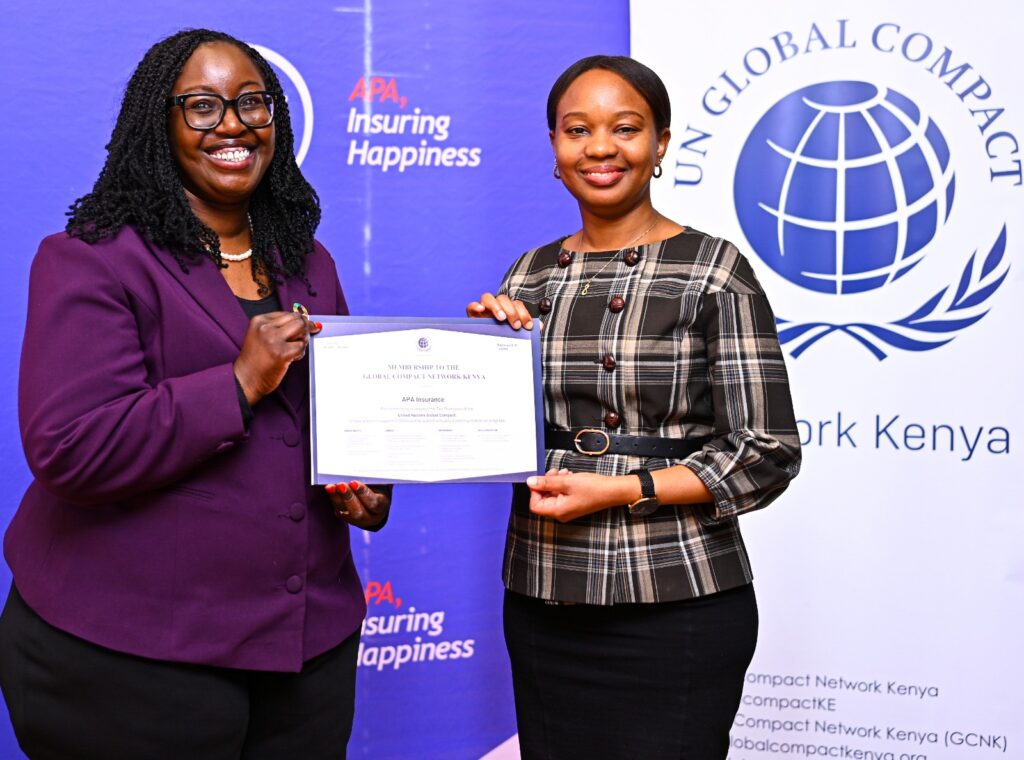
APA Insurance has joined the United Nations Global Compact (UNGC), committing to align its operations with global principles on human rights, labour, environmental protection and anti-corruption.
The move places the insurer among companies seeking to integrate responsible business practices into their operations as pressure grows on Kenya’s insurance industry to embed sustainability into underwriting, investments and corporate governance.
APA’s commitment was announced during an Insurance Sector Dialogue on Responsible Business and Sustainability convened by the UN Global Compact Network Kenya (GCNK) in Nairobi.
The forum brought together industry players to examine how insurers can strengthen sustainability practices while responding to emerging economic, social and environmental risks.
The UN Global Compact’s Ten Principles require participating companies to uphold fundamental human rights, labour standards, environmental responsibility and anti-corruption measures.
READ ALSO: APA Insurance undertakes an exclusive masterclass
GCNK said the insurance industry has made progress in adopting responsible business practices but needs to move faster in building long-term and sustainable business models.
The network urged insurers to use global platforms such as the UN Global Compact to access tools, technical resources and partnerships that can help companies integrate sustainability into their operations.
Participants identified limited internal capacity and a short-term business focus as some of the barriers slowing the adoption of sustainability practices across the sector.
They called for stronger partnerships between insurers, regulators, government and civil society to help address these challenges.
The dialogue also highlighted the need for regulatory frameworks to keep pace with the industry’s sustainability ambitions.
Insurers were urged to develop new products that can support green investment, climate adaptation and resilience as businesses and households face growing exposure to climate-related risks.
Participants further called for environmental, social and governance (ESG) considerations to be incorporated into insurance underwriting and investment decisions.
This would allow insurers to factor sustainability risks into decisions on which businesses and projects to insure and where to deploy investment capital.
The industry was also encouraged to strengthen knowledge-sharing on emerging risks, particularly climate-related shocks that could increase claims and affect the financial stability of insurers.
For APA, joining the UN Global Compact represents a formal commitment to responsible business principles at a time when sustainability is increasingly influencing corporate investment, risk management and governance.
The discussions underscored the need for the insurance sector to move beyond traditional risk-transfer models and play a greater role in supporting sustainable economic development.
Industry stakeholders said collaboration will be critical if insurers are to develop products and investment strategies capable of addressing environmental and social risks while maintaining long-term commercial viability.