Kenya Positions Itself at the Centre of Africa’s Data, Space and AI Future

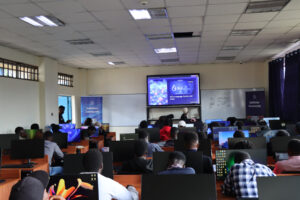
Kenya is strengthening its reputation as one of Africa’s leading technology and innovation hubs, hosting the continent’s first-ever Global Data Festival alongside the third Kenya Space Expo and Conference.
The four-day gathering in Nairobi has attracted more than 1,000 delegates from over 60 countries, bringing together government leaders, statisticians, researchers, technology experts, private sector executives and development partners to explore how data, artificial intelligence and space technologies can accelerate economic growth and sustainable development.
At the opening ceremony, Kenya National Bureau of Statistics (KNBS) Director General Dr. Macdonald Obudho highlighted the growing role of data in shaping public policy and driving inclusive development.
“Statistics are more than just numbers. They are a mirror of society,” said Obudho, noting that data-driven insights are increasingly helping governments identify inequalities, improve public services and ensure vulnerable populations are not left behind.
One example is Kenya’s first Time Use Survey, which revealed significant disparities in unpaid care work between men and women. The findings informed the development of the Kenya National Care Policy 2024. Enhanced data collection has also strengthened programmes targeting persons with disabilities and other underserved groups.
Kenya is now modernising its statistical systems through emerging technologies, including artificial intelligence, citizen-generated data and digital data collection tools aimed at improving the accuracy and accessibility of national statistics.
The event also marks a significant convergence between the data and space technology sectors, underscoring the increasing importance of satellite-derived information in solving real-world challenges.
Kenya Space Agency Director General Brigadier Hillary Kipkosgey said satellite technologies are becoming essential tools for governments seeking better insights into food security, climate resilience, disaster preparedness and environmental management.
“Satellites generate enormous amounts of information that help us understand what is happening on Earth,” he said.
The Kenya Space Agency is expanding the country’s Earth observation capabilities through investments in ground infrastructure and international partnerships, including collaborations with the Italian Space Agency. The goal is to make satellite data more accessible to researchers, innovators and public institutions across multiple sectors.
The conference comes at a pivotal moment as countries work toward achieving the United Nations Sustainable Development Goals (SDGs) before the 2030 deadline.
Kenya’s Special Envoy on Technology, Ambassador Philip Thigo, said stronger collaboration between governments, businesses and development organisations will be critical in closing data gaps and building interoperable systems that support innovation while safeguarding privacy.
“The private sector generates vast amounts of valuable information,” Thigo said. “The challenge is creating mechanisms that allow data sharing as a public good while protecting privacy and ensuring the data benefits citizens, businesses and governments alike.”
Global Partnership for Sustainable Development Data (GPSDD) Chief Executive Officer Jenna Slotin described Kenya as a model for how strategic investments in data infrastructure can fuel both economic and social transformation.
According to GPSDD, every dollar invested in national data systems can generate an average return of $32 through better planning, investment decisions and service delivery.
“Every data point represents a person, and every pixel represents a place, a community and a life,” Slotin said.
She added that robust national data systems are increasingly becoming a prerequisite for attracting investment, as businesses and investors depend on reliable information to assess opportunities and risks.
Beyond national government initiatives, local authorities are also embracing data-driven governance.
Vihiga Governor Dr. Wilber Ottichilo showcased how county governments are using Geographic Information Systems (GIS), satellite imagery and demographic analytics to improve decision-making in healthcare, urban planning, environmental conservation and land management.
In Vihiga County, GIS-based analysis has been used to identify underserved communities and guide the construction of health facilities based on population needs rather than political considerations.
“Data is crucial for planning and decision-making,” Ottichilo said. “We cannot effectively govern our counties without credible data that has been properly analysed and transformed into actionable information.”
Originally launched in Bristol, United Kingdom, in 2018 and later hosted in Punta del Este, Uruguay, in 2023, the Global Data Festival is being held in Africa for the first time. Its integration with a major space science conference reflects a growing global recognition that data, AI and space technologies are becoming increasingly interconnected drivers of development.
As the festival continues, one message is emerging clearly: Africa’s digital future will be shaped not only by connectivity and innovation, but by the quality of the data and space-based intelligence that underpin decision-making across governments, businesses and communities.